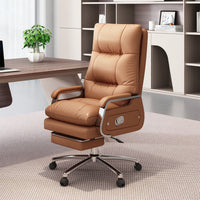

The right sofa makes a reception area more welcoming without blocking circulation or creating extra maintenance. Start with the available floor space and required seating capacity, then compare upholstery, frame construction, cushion support, cleaning needs, and layout. A compact loveseat may suit a small office, while a coordinated set or modular design can organize a larger lobby. This guide explains the main options and helps you choose commercial seating that looks professional and performs well in daily use.
Quick Answer
For most reception areas, choose a commercial-style sofa with supportive cushions, durable upholstery, a stable frame, and proportions that preserve clear walkways. Use a loveseat or individual chairs in a compact lobby, a three-seat model for straightforward capacity, and a modular or L-shaped arrangement for larger waiting areas. Measure the complete footprint, including side tables and occupied seating, and verify that the delivery route can accommodate every section.
Key Takeaways
- Measure walls, doors, reception counters, columns, and walkways before choosing the width and depth of the seating.
- Select the configuration by traffic pattern: individual seats support privacy, while loveseats and larger sofas use wall space efficiently.
- Leather-like surfaces are generally easy to wipe, while fabric offers a softer feel and broader texture choices; construction quality matters in either material.
- A coordinated sofa set creates visual consistency, but separate pieces can be easier to arrange in an irregular room.
- Do not assume an office sofa is a sleeper. Confirm that a product is specifically designed and rated as a sofa bed before planning overnight use.
Office Sofa Types Compared
| Type | Best For | Main Advantage | Things to Consider |
|---|---|---|---|
| One-seater | Small offices, private conversations | Flexible placement and personal space | Lower seating capacity per piece |
| Loveseat | Compact lobbies and executive offices | Seats two without using a long wall | Can feel close for unrelated visitors |
| Three-seat sofa | Standard reception and waiting areas | Simple, efficient guest seating | Requires a clear delivery path |
| L-shaped | Corners and larger lounges | Defines a seating zone and adds capacity | Orientation and corner depth must be checked |
| Curved | Design-led lobbies and open spaces | Softens circulation and creates a focal point | Less efficient against a straight wall |
| Modular | Flexible or growing workplaces | Sections can support multiple layouts | Connections and spacing require planning |
| Sofa bed | Approved dual-purpose rooms | Combines seating and a sleep surface | Needs opening clearance and verified sleeper construction |
Types of Sofas for Office and Reception Areas
One-Seater Sofa
A one-seater gives each visitor a defined personal space and can be positioned around doors, corners, or small tables. It works well in professional services, executive offices, interview areas, and layouts where guests may not want to share a cushion. Separate seats are also easier to move when the room needs a temporary change. The Meeting Room Reception Single Office Sofa provides one product reference when planning an individual seating arrangement.
Loveseat or Two-Seater Sofa
A loveseat is a practical middle ground between an accent chair and a full three-seat model. It fits smaller walls, preserves more circulation space, and can create a comfortable conversation area in a manager office. When unrelated customers frequently wait together, compare the usable seat width and armrest position; two nominal seats do not always provide the same personal space. The Loveseats and Settees collection includes multiple office-oriented formats.
Three-Seater Sofa
A three-seat sofa uses a straight wall efficiently and gives a standard waiting room an easy capacity baseline. It is often simpler to coordinate than several unrelated chairs, but the unit can be heavy and difficult to turn through narrow halls. Anzhap lists a Modern Office Sofa 91 Inches Wide with Fabric and Steel Frame, providing a useful reference for a full-length commercial seating footprint. Verify live dimensions, stock location, and delivery information before ordering.
L-Shaped Sofa
L-shaped sofas can turn a corner into a defined lounge and provide more seats without lining every wall with separate pieces. They work best when the left- or right-hand orientation matches the room and the return does not project into the main route from the entrance to the reception desk. Review the L-Shaped Sofas collection with a scaled floor plan in hand.
Curved Sofa
A curved design can soften a large lobby, guide movement around a central area, and make a guest-facing space feel less rigid. It is especially effective in open commercial interiors where the back of the seating remains visible. Curved furniture rarely sits flush against a straight wall, so include the unused space behind the arc in the footprint calculation before finalizing circulation.
Modular Sofa
A modular system is made from sections that can form a straight run, corner, or larger lounge. It is useful when a business expects to move, expand, or change the waiting-room layout. The Modern Minimalist Sectional Office Sofa with Lockable Drawers shows how storage can be integrated into a larger seating system. Confirm connectors, arm orientation, individual module sizes, and whether future matching sections will be available.
Sofa Set
A sofa set may combine one-, two-, and three-seat pieces in the same material and finish. The coordinated appearance is helpful in client-facing offices, and the mix of seat sizes can serve individuals and groups. A set is not automatically the best use of space, however. Measure each piece separately and arrange the group around circulation, sightlines, and visitor behavior instead of copying a residential living-room layout.
Office Sofa vs. Sofa Bed
A standard office sofa is designed primarily for seated waiting, conversation, or short breaks. A sofa bed includes a fold-out mattress or a platform that converts into a sleep surface. That feature can be useful in an approved staff rest room or hospitality setting, but it adds weight, moving parts, and opening-clearance requirements. Do not describe a product as a sleeper unless its specifications explicitly confirm that function. Anzhap office sofa listings should be evaluated as seating unless the individual product page states otherwise.
How to Choose the Right Sofa for a Commercial Space
- Measure the Complete Seating Zone
Record the room width and length, then mark the reception counter, door swings, columns, windows, floor outlets, and display areas. Measure depth as carefully as width: deep cushions may be comfortable but can narrow the walkway once people sit down. Include side tables, planters, lamps, and the space required for guests to approach and leave their seats. Keep required exit and accessible routes clear according to the rules that apply to the property.
If the lobby is compact, pair the seating plan with Anzhap's related article, How to Choose the Right Reception Desk When Space Is Limited, so the desk and waiting area are sized together rather than as separate projects.
- Match Capacity to Real Visitor Traffic
Base the seat count on normal busy periods, not only the average number of visitors. A low-traffic office may need one loveseat and two individual chairs; a clinic or service center may need several separate seating zones. Mix seat sizes when possible so solo visitors, companions, and small groups have appropriate choices. Avoid filling every open wall: a calm, navigable room often feels more welcoming than a crowded room with one extra seat.
- Compare Leather and Fabric Upholstery
Leather and leather-like upholstery can create a formal appearance and may allow quick surface cleaning, while fabric provides softness, color variety, and texture. Neither category guarantees durability on its own. Check seam construction, abrasion suitability, colorfastness, cleaning instructions, and replacement options. The Classic Office Sofa 49-80 Inches Wide with Leather and Steel Frame offers a leather-format reference, while the Modern Office Sofa 91 Inches Wide with Fabric and Steel Frame represents a fabric alternative.
- Evaluate the Frame, Cushions, and Support
The visible upholstery is only one part of long-term performance. Review frame material, base stability, leg attachment, cushion density, and whether covers or components can be serviced. Reception seating should support easy entry and exit, especially for visitors who may find very low or overly soft cushions difficult to use. A stable seat, supportive back, and resilient cushion are usually more useful than a dramatic shape that quickly loses comfort.
- Plan Cleaning and Daily Maintenance
Choose finishes that match the business's cleaning routine. Light upholstery can brighten a lobby but may show marks sooner; textured fabric can hide minor variation but may require more detailed vacuuming. Check the manufacturer's approved cleaning method before using disinfectants or stain removers. Leave enough space around and beneath each piece for staff to reach the floor, and inspect seams and high-touch areas regularly.
- Check Delivery, Assembly, and Stock Status
Large sofas may fit the room but fail at an elevator, stair turn, or doorway. Compare packaged dimensions with the entire delivery route and confirm whether assembly is required. Stocked and made-to-order products can have different lead times, so rely on the current product page rather than an old price or delivery estimate. Buyers considering assembly support should also review the installation information provided during checkout.
Office Sofa Size and Layout Guidelines
Product dimensions should always control the final plan, but broad size bands can help with early layouts. A single seat is often around 28 to 40 inches wide, a loveseat around 48 to 72 inches, and a three-seat model around 72 to 96 inches or more. Depth commonly has as much impact as width. Add the occupied chair zone and comfortable circulation instead of drawing only the furniture outline against the wall.
- Small reception area: one loveseat or two individual seats with a compact side table.
- Medium reception area: one three-seat sofa plus one or two separate chairs to create flexible seating.
- Large lobby: a modular arrangement, multiple seating groups, or a coordinated sofa set that separates quiet waiting from conversation.
- Executive office: a loveseat or two chairs positioned for conversation without competing with the desk workspace.
Further reference: The Anzhap Office Sofa collection provides product examples across several sizes, materials, and configurations. For dimensions or construction details that are not clear on an individual listing, use the Anzhap contact page to request product-specific information before planning the final layout.
Frequently Asked Questions
- What type of sofa is best for an office?
The best option fits the measured room, expected visitor traffic, cleaning routine, and desired level of formality. Loveseats work well in compact offices, three-seat models provide straightforward capacity, individual seats offer personal space, and modular designs support flexible larger layouts.
- What is the difference between an office sofa and a sofa bed?
An office sofa is primarily designed for sitting, while a sofa bed converts into a sleep surface through a fold-out mattress or convertible platform. A sleeper requires extra opening space and product-specific support. Never assume a regular office sofa can be used as a bed unless the specifications explicitly say so.
- What does sofa cama mean?
The Spanish term sofa cama means sofa bed or sleeper sofa. Shoppers using this phrase are usually looking for convertible furniture rather than standard reception seating. Check the product description for a genuine sleeping mechanism before purchasing.
- Is a sofa set better than separate pieces?
A sofa set creates a coordinated appearance and may simplify finish selection. Separate pieces provide greater freedom in an irregular room and make future replacement easier. The better choice depends on the floor plan, traffic flow, and whether all pieces in the set are genuinely needed.
- Is leather or fabric better for office sofas?
Leather and leather-like surfaces often provide a polished look and straightforward surface wiping, while fabric tends to feel softer and offers more colors and textures. Compare the actual commercial durability, seams, cushion construction, and approved cleaning method instead of choosing by material name alone.
- How do I measure a reception area for a sofa?
Measure wall length, available depth, door swings, columns, reception furniture, and all walking routes. Mark the full footprint with tape, including side tables and occupied seating space, then verify that the packaged sections can pass through the building entrance, elevator, hallways, and room doorway.
- How many sofas should a waiting room have?
Plan for the usual busy-period visitor count and use a mix of seating when possible. A small office may need one loveseat and two chairs, while a larger lobby may work better with several smaller groups than one continuous row of sofas. Preserve circulation and personal space rather than maximizing the seat count at every cost.
Conclusion
A well-chosen sofa supports visitors, protects circulation, and reinforces the professional character of a workplace. Start with measurements and real traffic, then compare one-seater, loveseat, three-seat, L-shaped, curved, modular, and coordinated set options. Evaluate upholstery, frame strength, cushion support, cleaning, delivery, and assembly before focusing on color alone. If a sleeper function is required, verify a true sofa bed rather than assuming standard reception seating can convert. With a complete floor plan, Anzhap's office seating categories can be compared by size, material, and configuration with much greater confidence.