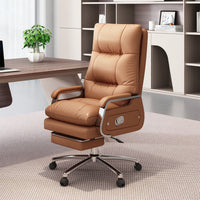

Most people don't think much about their office chair until their back starts complaining. By then, the damage is already done — hours of poor posture, inadequate support, and a seat that wasn't designed with your body in mind. The good news is that choosing the right ergonomic office chair doesn't have to be complicated. Once you understand what to look for, it becomes a lot easier to find something that genuinely works for you.
This guide covers everything you need to know before you buy.
Why Chair Choice Matters More Than You Think
If you're working a standard eight-hour day, you're spending roughly a third of your waking life in your office chair. That's not a small thing. A poorly fitted chair contributes to lower back pain, neck tension, shoulder stiffness, and even reduced circulation in your legs. Over months and years, those effects compound.
An ergonomic office chair is designed to counter all of that — not by being particularly fancy or expensive, but by supporting your body in a way that reduces strain and encourages better posture naturally. The key word is "fitted." An ergonomic chair that doesn't fit your body isn't ergonomic at all. It's just an expensive chair.
Measure How The Office Chair Fit Your Body
Before you start comparing models, take a few minutes to understand your own proportions. The right chair for someone who is 5'4" looks very different from the right chair for someone who is 6'2".
Seat height should allow your feet to rest flat on the floor with your knees at roughly a 90-degree angle. If your legs dangle or you find yourself perching on the edge to reach the ground, the chair isn't a good fit.
Seat depth matters more than most people realize. You should be able to sit all the way back in the seat — making full contact with the backrest — while still leaving a few inches of space between the front edge of the seat and the back of your knees. Too deep and you'll slouch forward; too shallow and the seat puts pressure on your thighs.
Seat width should give you a little room on either side without feeling like you're swimming in the chair. Most standard chairs are built around average body widths, so if you're on the broader side, it's worth specifically looking for wider seat options.
What to Consider When Choosing an Ergonomic Office Chair
There's a lot of marketing language around ergonomic chairs. Here's a practical breakdown of which features genuinely make a difference.
Lumbar Support
This is the single most important feature of any ergonomic lumbar support office chair. Your lower back has a natural inward curve, and most chairs — especially cheaper ones — do nothing to support it. Over time, sitting without lumbar support causes that curve to flatten, which strains the muscles and discs in your lower back.
Good lumbar support fills the gap between your lower back and the chair, maintaining that natural curve without forcing it. Look for adjustable lumbar support — both in height and depth — so you can dial it in to your specific spine. Some chairs offer dynamic lumbar support that moves with you, which is worth considering if you shift around a lot throughout the day.
Armrests
Adjustable armrests are more important than they often get credit for. Armrests that are too high force your shoulders up; too low and you end up hunching. Ideally, your arms should rest lightly on the armrests with your shoulders relaxed and your elbows at roughly a 90-degree angle. Look for armrests that adjust in height, width, and ideally pivot — 4D armrests cover all of these axes and are worth the upgrade if you're investing in a quality chair.
Backrest Height and Recline
A taller backrest that supports your entire back — including the upper back and shoulders — is generally preferable to a shorter one that only covers the lower back. Recline capability matters too. Being locked in a perfectly upright 90-degree position all day is actually more tiring than it sounds. A chair that lets you recline slightly — with tension control so it matches your body weight — allows your muscles to relax periodically throughout the day.
Seat Material
Mesh seats are breathable and tend to be more comfortable in warmer environments. Foam or padded seats can feel more plush initially but may compress over time. High-density foam holds its shape longer. If you tend to run warm or work in a poorly ventilated space, mesh is usually the better call.
Office Chair With Footrest?
For some people, an ergonomic office chair with footrest is a genuine game-changer. This is particularly relevant if you're on the shorter side and struggle to keep your feet flat on the floor even at the chair's lowest setting, or if you work long hours and want to elevate your legs to improve circulation periodically.
A footrest — whether built into the chair or used as a standalone accessory — takes pressure off your thighs and lower back and can make extended sitting significantly more comfortable. It's not a must-have for everyone, but if you've ever found yourself tucking your feet under your chair or crossing your legs to get comfortable, it's worth considering.
Common Mistakes When Buying an Ergonomic Chair
Buying without trying. If possible, sit in a chair before committing. Photos and spec sheets only tell you so much.
-
Prioritizing looks over function.
A chair that looks sleek in a product photo isn't necessarily one you'll want to sit in for eight hours.
-
Ignoring the adjustment range.
A chair with a wide adjustment range fits more people and gives you more room to fine-tune your setup as your needs change.
-
Skipping the break-in period.
A new ergonomic chair often feels unfamiliar at first, especially if you're coming from something less supportive. Give it a week or two before writing it off.
Final Thoughts
The right ergonomic office chair fits your specific body, supports your natural posture, and gives you enough adjustability to fine-tune the fit over time. Whether you need an ergonomic lumbar support office chair for an existing back condition, an ergonomic office chair with footrest for better leg comfort, or simply something more supportive than what you're currently using — the investment is worth making.
Your body will notice the difference. It just takes a little time to find the chair that makes it. Ready to get started? Shop our full range of ergonomic office chairs and find the one that fits you best.