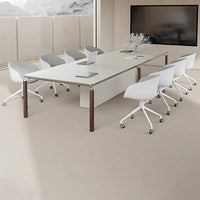

When designing a professional corporate environment, one of the most common mistakes is assuming that a single table style can serve every purpose. In the modern office landscape of 2026, the furniture you choose for a high-stakes executive suite serves a vastly different psychological and functional role than the pieces placed in a learning center. Selecting the right conference table for boardroom environments requires an eye for prestige and permanence, while choosing training room tables demands a focus on agility and rapid reconfiguration.
In this comprehensive guide, we break down the critical differences in furniture requirements, flexibility needs, and spatial planning to help you make a strategic investment in your office infrastructure.
Boardroom Furniture Requirements: Prestige, Power, and Permanence
The boardroom is the "inner sanctum" of any business. It is where multi-million dollar deals are signed, board members deliberate on future strategies, and high-value clients are hosted. Therefore, a conference table for boardroom use must act as a physical manifestation of the company’s brand, stability, and success.
1. Material and Aesthetic Authority
In a boardroom, "visual weight" matters. These tables are typically crafted from premium, high-density materials such as solid walnut, oak, or high-end stone veneers. The goal is to create a sense of permanence. An architectural silhouette—whether it be a classic rectangular shape or a modern boat-shaped design—signals to everyone in the room that the discussions taking place are of the highest importance. Using materials like "Scandia" walnut or dark Italian oak suggests a legacy of success.
2. Integrated Executive Technology
A modern conference table for boardroom settings must hide the "mechanical" side of business. This means integrated cable management is non-negotiable. Look for tables with:
- Flip-top power hubs: To provide discreet access to outlets.
- HDMI & USB-C connectivity: Seamlessly integrated into the tabletop.
- Under-table wire channels: To ensure the surface remains pristine and free from a "rat's nest" of cables.
3. Psychological Impact
The boardroom environment is designed to minimize distractions and maximize focus. A heavy, solid table provides a grounded feeling, helping participants feel secure during difficult negotiations. It establishes a formal boundary that encourages professional decorum.
Training Room Flexibility Needs: Agility, Interaction, and Growth
While the boardroom is about stability, the training room is about movement. Training room tables are tools for development, brainstorming, and education. The environment must be able to transform from a lecture-style setup to small-group clusters in a matter of minutes.
1. Modularity and Mobility
The primary requirement for training room tables is absolute mobility. In a dynamic 2026 office, a room might serve as a classroom in the morning and a collaborative "war room" in the afternoon. High-quality options feature:
- Heavy-duty, silent casters: Allowing one person to move the furniture without scratching the floors.
- Flip-top or "Nesting" mechanisms: These allow the table surfaces to be flipped vertically so the tables can be nested together, saving 70% of floor space when not in use.
2. Durability for High-Traffic Environments
Unlike the carefully managed boardroom, training rooms see high-frequency use. Tables are constantly moved, bumped, and potentially spilled on. Therefore, the surfaces of training room tables are typically high-pressure laminates (HPL) or melamine. These materials are scratch-resistant, impact-resistant, and easy to sanitize.
3. Collaborative Versatility
The best training room tables often feature "linkable" hardware. This allows users to lock several smaller tables together to create a larger communal surface for team projects, then quickly unlock them for individual testing or focused work.
Size, Shape, and Seating Capacity: Engineering the Conversation
The geometry of your furniture dictates the flow of communication in the room. When comparing a conference table for boardroom layouts with training setups, the "occupancy rule" changes significantly.
1. Boardroom Seating: The Comfort Standard
In a boardroom, participants often sit for three to five hours at a time. Therefore, each person requires more "elbow room" and a higher level of ergonomic support.
- Linear Space: Budget for at least 30 to 36 inches per person.
-
Shape Dynamics: * Rectangular/Boat-Shaped: Best for 12–20 people, providing a clear hierarchy with "power seats" at the ends.
- Oval: Best for 8–12 people, fostering a more egalitarian feel where no one person is the "head."
2. Training Room Seating: The Density and Sightline Standard
Training room tables are designed for visual density and clear sightlines to a screen or white-board.
- Classroom Setup: Typically uses 60-inch or 72-inch long tables that seat two people per unit. This setup prioritizes focus on the instructor.
- U-Shape Configuration: A popular hybrid using training room tables to allow an instructor to walk into the center to provide one-on-one coaching to students.
- Seating Capacity: In a training room, you can often fit 20-30% more people in the same square footage compared to a boardroom because the furniture is more streamlined.
Buying Guide: Checklist for the 2026 Workspace
Before making your final procurement decision, ensure your furniture choice meets these professional standards:
Conclusion: Balancing Brand and Utility
The choice between a conference table for boardroom use and various training room tables comes down to the "Mission" of the space.
If your goal is to build a legacy, host VIPs, and close high-stakes deals, invest in the weight, warmth, and prestige of a permanent boardroom masterpiece. It is an investment in your company's image. However, if your goal is to build a culture of continuous learning, team agility, and rapid innovation, invest in the modularity and resilience of a high-quality training suite.
In the modern office, the right furniture isn't just a place to sit—it is a tool that supports the way your team thinks, speaks, and grows.
Shop Conference Tables